Quick answer
- In the first 48 hours after a hurricane, stay clear of downed lines and standing water, never run a generator indoors, and photograph all damage before moving anything.
- Polk County asks for five separate storm debris piles: vegetative, construction and demolition, appliances, electronics, and household hazardous waste; mixed piles get skipped until the final pass.
- Public collection is slow for fallen fences, collapsed sheds, soaked drywall and carpet, ruined appliances and pool cage panels; a private hauler clears those in days.
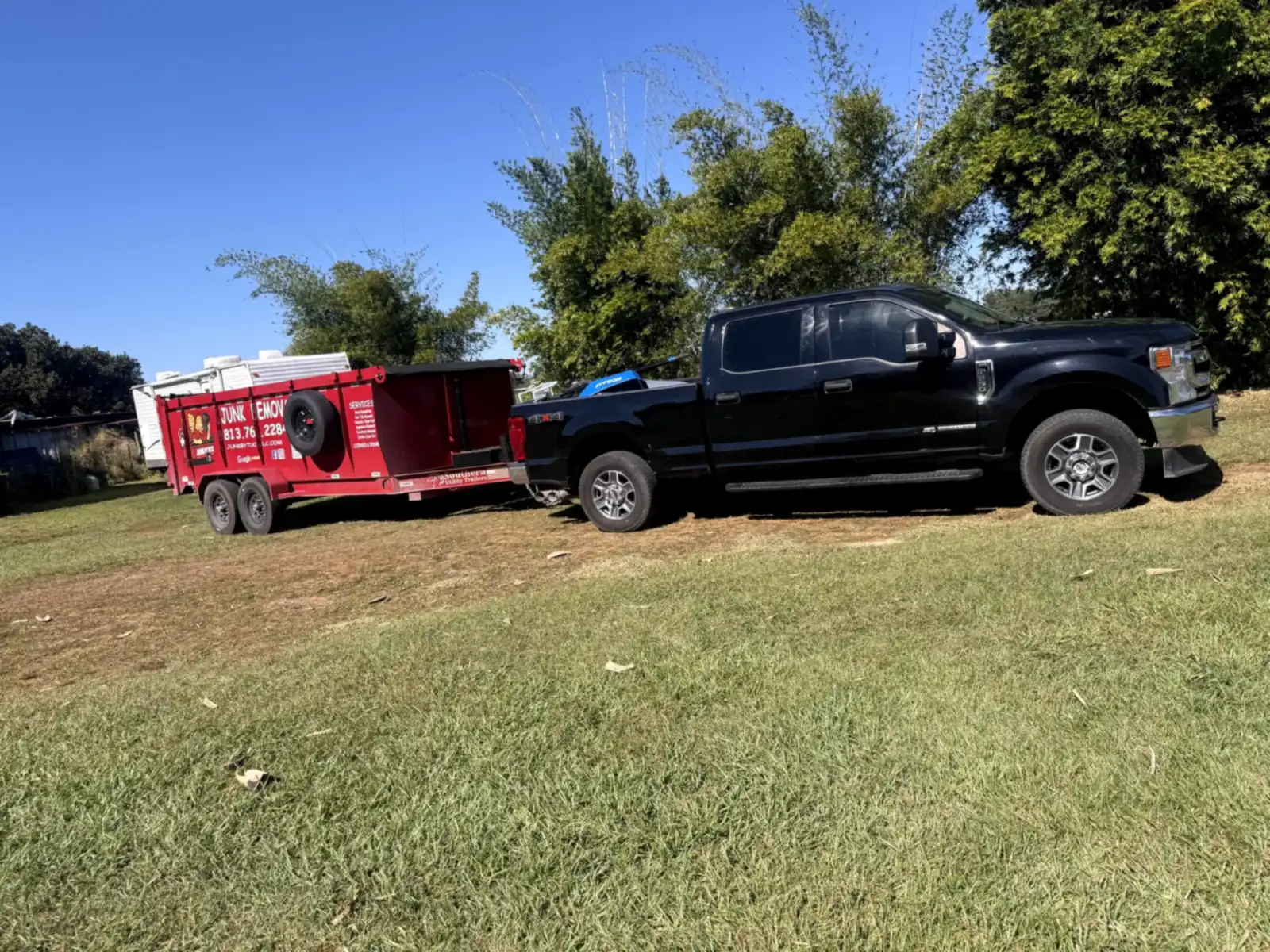
- Junk By Tuck keeps per-load pricing at $130 to $650 after storms, quotes from texted photos, and runs same-day when routes allow.
- Clear loose junk from the yard before June and take a video inventory so a storm has less to throw and insurance has more to see.
After a hurricane hits Lakeland or anywhere in Polk County, cleanup goes in three stages: stay safe and document the damage in the first 48 hours, get storm debris to the curb in the separated piles the county asks for, then deal with the things public collection will not solve quickly, like a fallen fence, a collapsed shed, soaked drywall and a ruined refrigerator. Junk By Tuck handles that third stage with light demolition, construction debris and appliance removal at the same per-load prices as the rest of the year, $130 to $650, with photo quotes by text.
What should you do in the first 48 hours after the storm?
The first two days are about safety and paperwork, not hauling.
- Assume every downed line is live. Stay away from wires in the yard, on the fence or tangled in a fallen oak until the utility has cleared them.
- Stay out of standing water. Floodwater near the Lakeland lakes can hide septic overflow, sharp debris and energized wires.
- Never run a generator indoors, in the garage or under the lanai. Put it outside, well away from windows and doors.
- Photograph and video everything before you move it. Insurance adjusters need to see the fence, the water line on the drywall and the tree on the shed as they were.
Once you have the photos, start moving wet drywall, carpet, padding and upholstered furniture out of the house. More on why below.
How does Polk County storm debris collection work?
After a declared storm, Polk County runs a separate claw truck collection that passes through neighborhoods in stages. The county's instructions from the 2024 Hurricane Milton cleanup are the best guide, and the rules come down to sorting.
Residents were asked to separate debris into five piles at the curb:
- Vegetative debris: unbagged branches, logs and plants
- Construction and demolition debris: lumber, drywall, fencing, carpet, furniture and mattresses
- Appliances and white goods
- Electronics
- Household hazardous waste
Mixed piles get skipped until the final pass, which can mean weeks of a rotting pile out front. Leaves, moss and small twigs must be bagged rather than piled loose. Keep every pile out of the road and away from trees, mailboxes and power lines so the claw truck has room to reach it.
Instructions can change from storm to storm, so check the county's site after landfall. Inside Lakeland city limits, contact City Solid Waste at 863-834-8773 or solidwastemanagement@lakelandgov.net to arrange bulk collection and confirm the current storm instructions. Debris generated by a hired contractor must be removed by the homeowner or contractor. Details are on the City of Lakeland bulk pickup page.
Want an exact price for your pile?
Text photos to (888) 296-8825 with your ZIP code. Tuck replies with an upfront, per-load price. No visit, no fee.
What does public collection usually not solve quickly?
County collection is built for the huge volume of tree debris a hurricane leaves across hundreds of square miles. The rest waits. These are the jobs we get called for after every storm.
The fence that fell. A hundred feet of wood privacy fence in a Davenport or Haines City subdivision is heavy and often tangled with the neighbor's section. We finish taking it down, pull the posts if you want, and haul it.
The shed that collapsed. A metal or resin shed that folded in the wind is a light demolition cleanup job: we cut it into pieces, sort the metal for recycling and clear the slab.
Soaked drywall, carpet and padding inside the house. The most urgent one. The county will collect it eventually as C&D, but it needs to be out of the house now. Our construction debris removal crew carries it out of the house, not just off the curb.
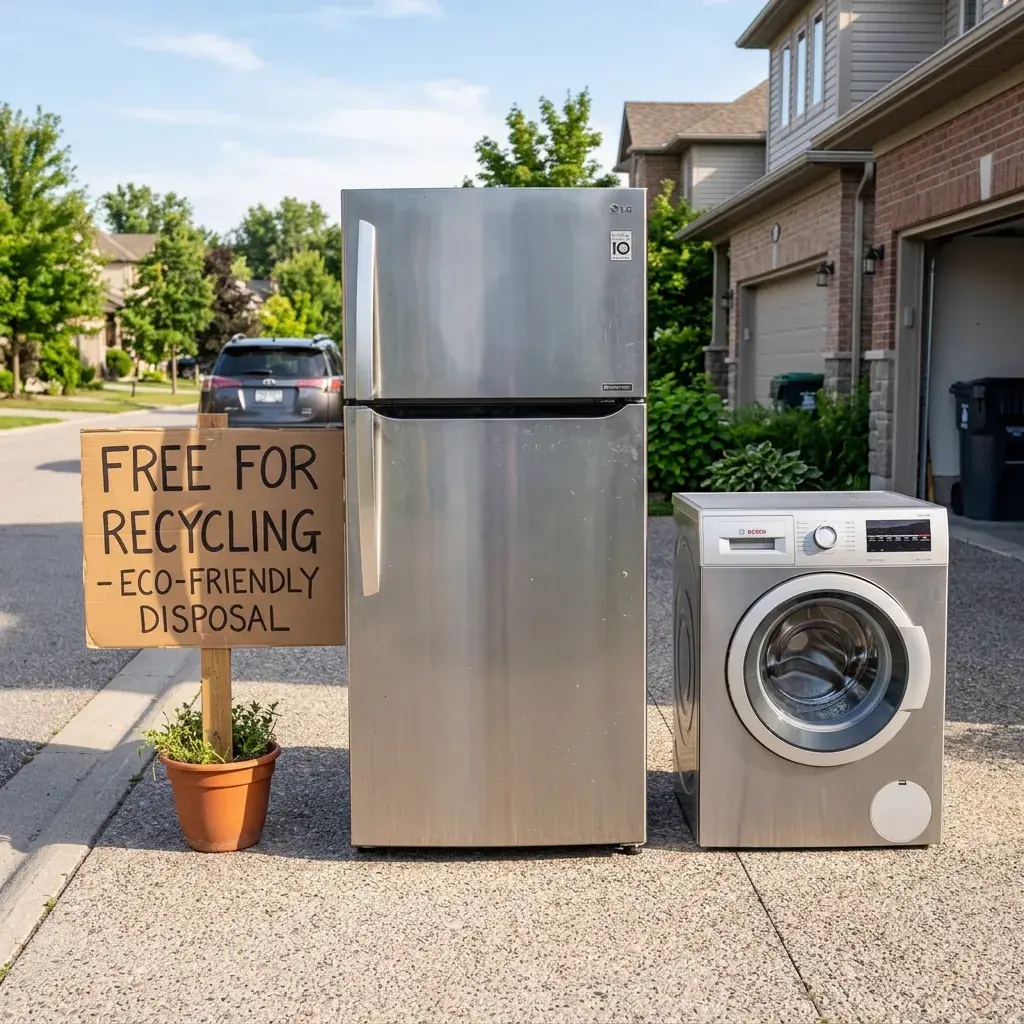
Ruined appliances and mattresses. A refrigerator that lost power for a week is a biohazard by day three. Refrigerators, freezers and AC units go to licensed facilities for refrigerant recovery under Section 608 of the Clean Air Act before the metal is recycled; see our appliance removal page.
Pool cage and screen enclosure panels. Aluminum framing and torn screen end up in the pool and across the yard. We pull it out, cut it down and recycle the aluminum; a cage still partly standing and unsafe becomes a light demolition job.
We do not take hazardous materials. Paint, chemicals, pesticides and tires go in the county's household hazardous waste pile or to the North Central Landfill in Winter Haven.
Why does speed matter in Florida heat?
Polk County hurricanes land between August and October, with temperatures in the 90s and humidity near 100 percent, and wet building materials do not dry out on their own in that weather. Soaked drywall, carpet, padding and upholstered furniture start to smell within days, and once mold is established in a wall cavity, the repair costs more than the original water damage.
Pests are the other problem. Wet furniture, food from a dead refrigerator and rotting yard waste draw rats, roaches and mosquitoes fast, and a mixed pile the county skips can sit for weeks. Hauling the non-vegetative debris privately gets it gone while the county works through the trees.
What to expect from Junk By Tuck after a storm
Here is how this works in the days after landfall.
- Photo quotes by text. Text photos of the pile, fence, shed or interior debris to (888) 296-8825 with your ZIP code, or use the send photos page, and we reply with a fixed per-load price.
- Per-load pricing does not change after a storm. A 1/4 load is still $220, a 1/2 load is still $360, a full 16.5 cubic yard load is still $650, including labor, hauling, sorting and disposal fees. No storm surcharges, no fuel fees.
- Same-day when routes allow. We run same-day junk removal year-round, and the earlier in the day you text, the better the odds.
- Longer waits in the first few days. After a direct hit, every hauler in Polk County is booked, the landfill has lines, and roads in Bartow or Fort Meade may be blocked. We give you the honest earliest date, usually days, not weeks, rather than promise a day we cannot hit.
- Priority on interior water damage. Tell us if you have wet drywall and carpet inside the house; those jobs go ahead of driveway piles that can wait.
We serve all of Polk County, including Lakeland and Winter Haven, and eastern Hillsborough out to Brandon and Sun City Center.
Which debris goes where, and who usually hauls it?
The county pile category follows Polk County's Milton-era instructions; confirm the current rules after any new storm.
| Debris type | County pile category | Who typically handles it |
|---|---|---|
| Tree limbs, logs, palm fronds, shrubs | Vegetative (unbagged) | County claw truck, usually first pass |
| Leaves, moss, small twigs | Vegetative, must be bagged | County |
| Fallen wood or vinyl fence | Construction and demolition | Junk By Tuck; county if fully dismantled and stacked |
| Collapsed metal or resin shed | Construction and demolition | Junk By Tuck light demolition |
| Wet drywall, carpet, padding, insulation | Construction and demolition | Junk By Tuck, even from inside the house |
| Soaked mattresses and upholstered furniture | Construction and demolition | Junk By Tuck for fast removal; county on a later pass |
| Refrigerator, freezer, washer, water heater | Appliances and white goods | Junk By Tuck with refrigerant recovery; county on a later pass |
| Televisions, computers | Electronics | County electronics pile |
| Pool cage aluminum and screen panels | Construction and demolition | Junk By Tuck, including damaged framing |
| Paint, chemicals, pesticides, pool chlorine, tires | Household hazardous waste | County HHW pile or landfill drop-off; not Junk By Tuck |
| Contractor tree work or roofing debris | Not collected by City of Lakeland | The contractor who generated it, or Junk By Tuck |
What should you clear before hurricane season?
The cheapest storm cleanup happens in May. Every loose object in the yard becomes a projectile in hurricane winds, and every pile of old junk on the lanai becomes a wet, moldy pile after the storm.
- Clear the yard of loose junk before June. Old grills, broken patio furniture, scrap lumber, the unused trampoline, dead appliances behind the shed. If it can fly, remove or secure it.
- Take a video inventory. Walk through every room, the garage and the yard with your phone once a year. Insurance claims go faster with a before video.
- Use your free city bulk pickup. City of Lakeland residents get four free bulk or yard waste collections per calendar year, up to 20 cubic yards each. Use one in the spring to clear the yard.
A pre-season cleanup is usually a 1/8 or 1/4 load, $130 or $220, and takes us under an hour.

Written by Tuck
Owner-operator of Junk By Tuck LLC in Lakeland. Tuck has personally hauled 450+ jobs across Polk and Hillsborough Counties and answers the phone himself. More about Tuck